50,000 Tasks Per Week: How We Built an AI Agent Team That Never Sleeps
Last week, Matt Shumer — an AI entrepreneur from San Francisco — wrote an article that went viral in tech circles. His core message was simple but staggering: He gives an AI a task, walks away for four hours, and comes back to a finished product. Not a draft. The final product. No corrections needed.
I read the article and thought: Yes. That's exactly what it feels like.
Because for me, this isn't a future scenario. This is Thursday, February 12, 2026.
What We're Building Right Now
At my company, I no longer work alone. I have a team. But it's not just humans.
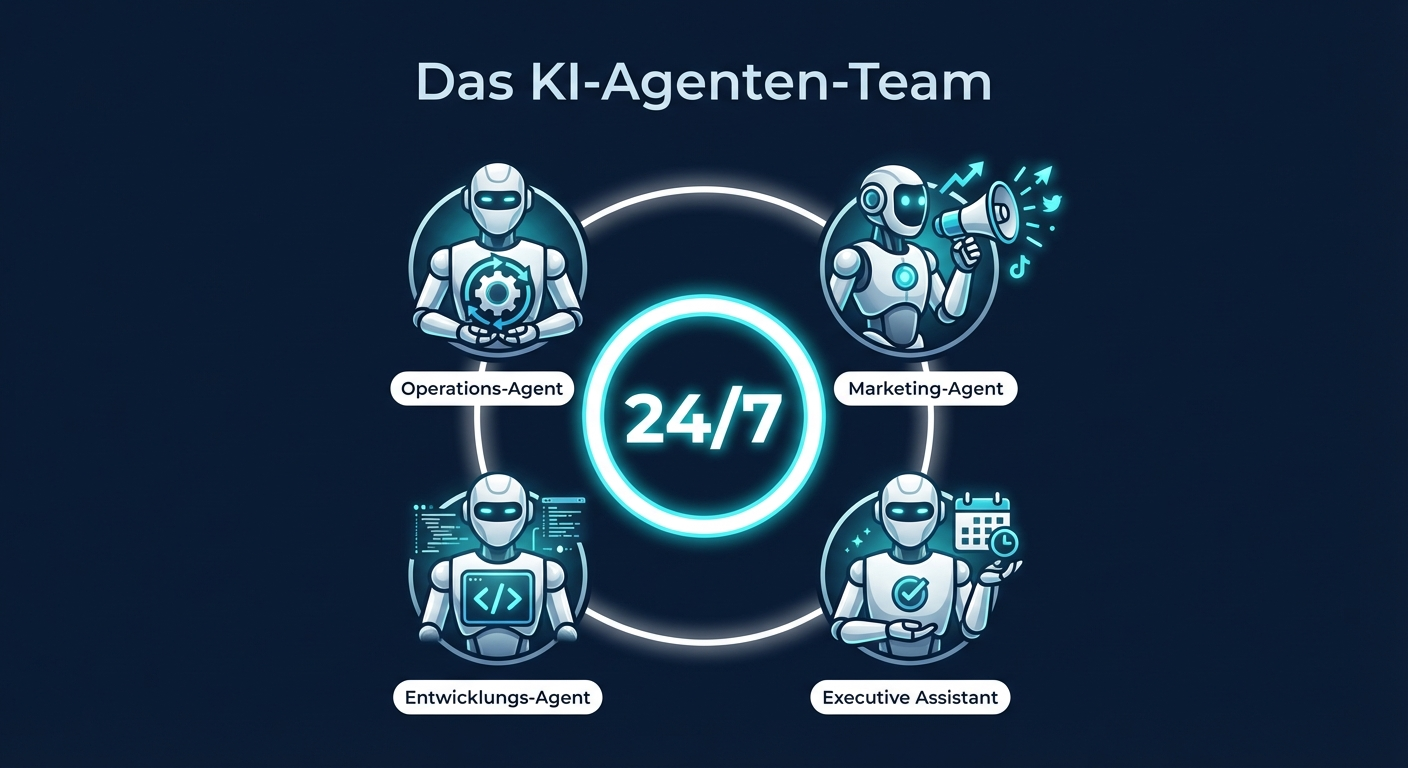
We currently run 16 AI agents:
- Operations Agent — Handles project management, client communication, status tracking
- Marketing Agent — Creates content, manages campaigns, runs social media
- Development Agent — Writes code, runs tests, deploys autonomously to production
- Executive Assistant — My personal AI that manages my calendar, emails, and daily briefings
They work 24/7. They never sleep. They never forget. And they get better every single week.
The Numbers That Surprise Even Me
For a logistics client, our AI agents currently handle over 50,000 tasks per week.
Let that sink in. Fifty thousand.
These aren't fantasy numbers from a pitch deck. This is happening right now, this week, while you're reading this article.
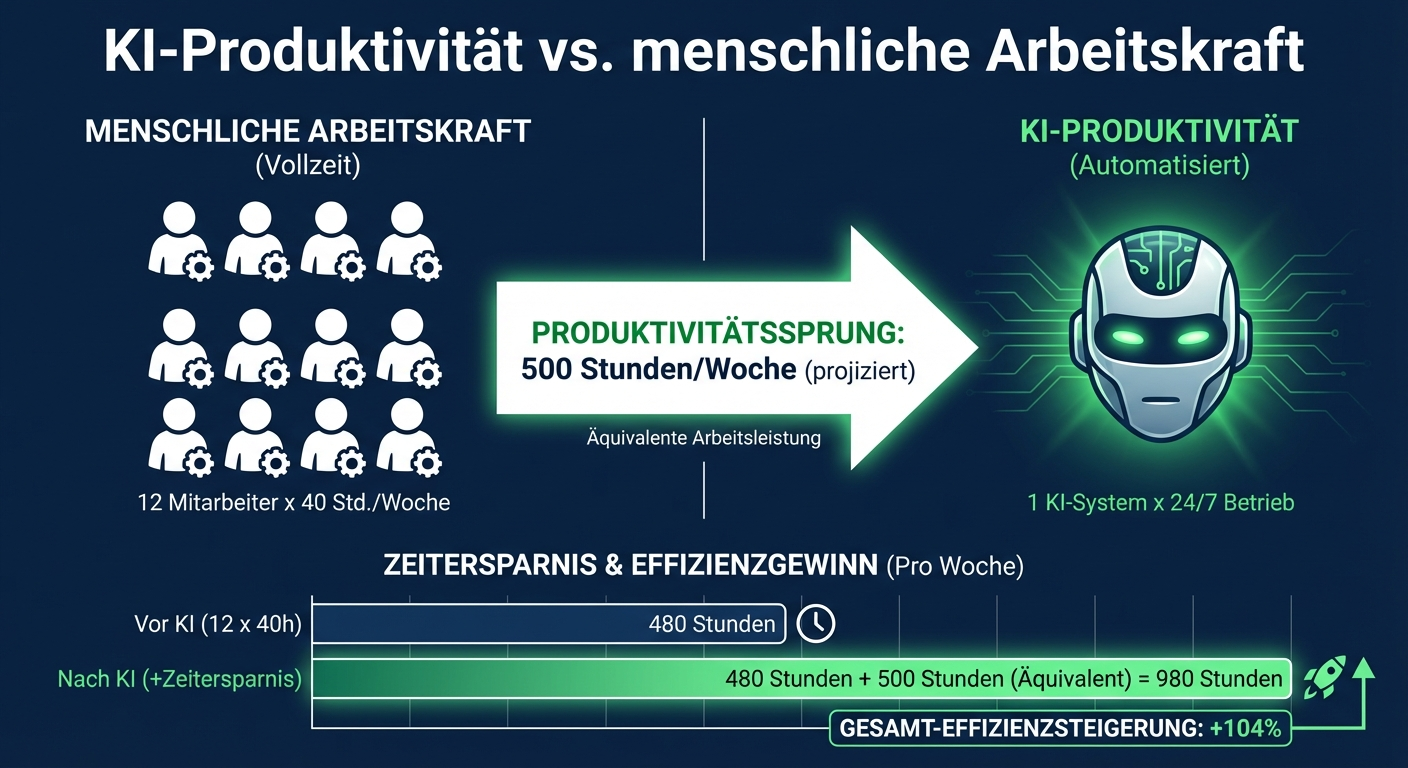
For our clients, this means: up to 500 hours of saved work time. Per week. Per client.
That's the equivalent of 12 full-time employees — working without breaks, without sick days, without overhead.
The Gap Nobody Talks About
I'm not telling you this to brag. I'm telling you because I see how massive the gap is between what's actually possible right now and what most companies are doing.
Most executives are still debating:
- "Is AI really that good?"
- "Can you trust it?"
- "Isn't this all overhyped?"
Meanwhile, our systems produce more output than a mid-sized team — at a fraction of the cost.
This isn't the future. This is Thursday.
The Article That Shook Me This Week
Für Entscheider im Mittelstand
Vom KI-Interesse zum kontrollierten ersten Pilot.
Im AI-Agenten Blueprint Sprint priorisieren wir Ihren ersten Einsatzfall und definieren Datenzugriffe, Freigaben, Verantwortlichkeiten und einen 30-Tage-Plan.
Matt Shumer's article struck a nerve because he pointed to something most people missed. On February 5th, OpenAI published the following in their technical documentation:
"GPT-5.3-Codex is our first model that was significantly involved in its own development."
Read that again. The AI helped build itself.
This isn't science fiction. That's a direct quote from OpenAI's official release notes.
Dario Amodei, CEO of Anthropic (the company behind Claude), has publicly stated that we're only 1-2 years away from AI autonomously developing the next generation of AI.
When the people actually building these systems tell you the timeline is measured in months, not decades — it's time to pay attention.
What This Means for Your Business
The organization METR measures how long AI can work autonomously on complex tasks. Here's the trajectory:
- A year ago: 10 minutes of autonomous work
- Today: Nearly 5 hours of autonomous work
- The trend: Doubling every 4-7 months
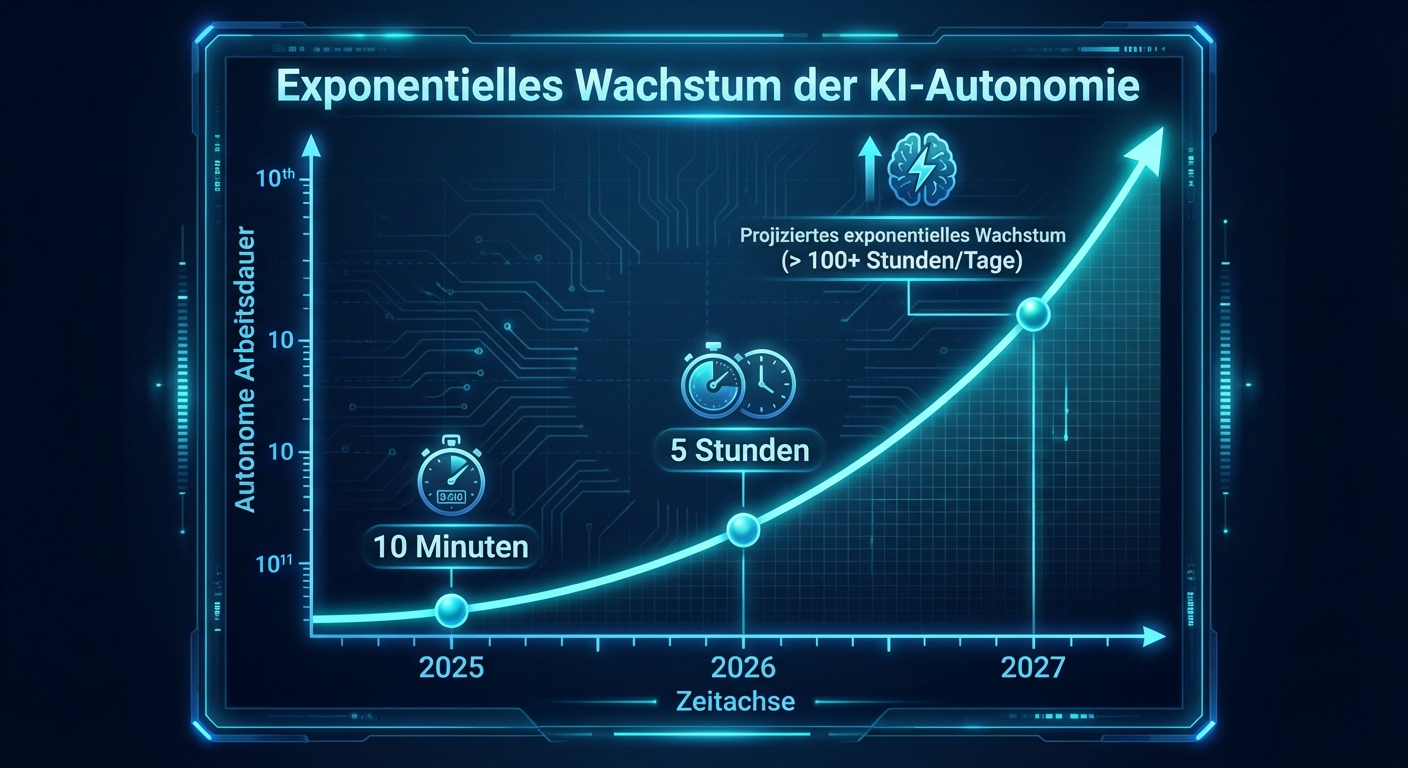
Extrapolate: Within a year, we're talking about AI that can work autonomously for days. Within two years, for weeks.
Amodei has publicly predicted that 50% of entry-level office jobs could disappear within 1-5 years. And many people in the industry consider that a conservative estimate.
Here's the uncomfortable truth: AI doesn't replace a specific skill. It's a general replacement for knowledge work. It gets better at everything simultaneously.
When factories were automated, workers could retrain as office workers. When the internet disrupted retail, people moved into logistics. But AI doesn't leave a convenient gap to transition into. No matter what you retrain for — it's getting better at that too.
What You Can Do Right Now
1. Try It Seriously
$20/month for Claude Pro or ChatGPT Plus. But don't use it as a Google replacement — use it for real work.
Take the task you spend the most time on every week and see if AI can handle it. The first attempt might not be perfect. Iterate. Rephrase. Give more context. You'll be surprised what works.
2. Think in Systems, Not Prompts
A single prompt doesn't change much. An agent handling 50,000 tasks per week changes everything.
The difference is mindset: You don't ask AI to help with a task — you build AI systems that run continuously.
3. Build Something
Whatever you've been putting off because it seemed too hard or too technical — try it. The barriers have largely disappeared.
Want to build an app? Describe it in plain language. Want to automate a process? There's probably an AI agent that can do it. Want to learn a new skill? The world's best teacher is now available for $20/month, infinitely patient, available 24/7.
The Bottom Line
People who act now will have an enormous head start in six months.
This isn't a prediction about some distant future. This is my description of what I've observed in my own company over the past year.
The question isn't whether AI will transform your industry. The question is whether you'll be ahead of the wave or swept away by it.
We're past the point where this is an interesting dinner conversation about technology trends. The future is already here. It just hasn't knocked on your door yet.
It will soon.
If you want to see what AI agents could look like in your company, reach out. I'd love to show you what's actually possible right now.
Original article that inspired me: Something Big Is Happening by Matt Shumer
Für Entscheider im Mittelstand
Vom KI-Interesse zum kontrollierten ersten Pilot.
Im AI-Agenten Blueprint Sprint priorisieren wir Ihren ersten Einsatzfall und definieren Datenzugriffe, Freigaben, Verantwortlichkeiten und einen 30-Tage-Plan.
Tags
About the Author

Jan Koch
KI Experte, Berater und Entwickler. Ich helfe Unternehmern und Entwicklern, KI effektiv einzusetzen - von der Strategie bis zur Implementierung.
Related Articles
I'm Building a Fully AI-Powered Company. Here's the Plan.
16 AI agents. 50,000 automated tasks per week. And I'm documenting the entire journey — every win, every failure, every lesson.
5 min
I Built a Fully AI-Driven Company. Here Is the Plan.
16 AI agents. 50,000 automated tasks per week. And I am documenting the entire journey — every success, every failure, every lesson.
5 min
50,000 Tasks Per Week: How We Built an AI Agent Team That Never Sleeps
16 AI agents. 50,000 tasks per week. Less than €30 in API costs. Here is the exact setup that makes it possible.
4 min